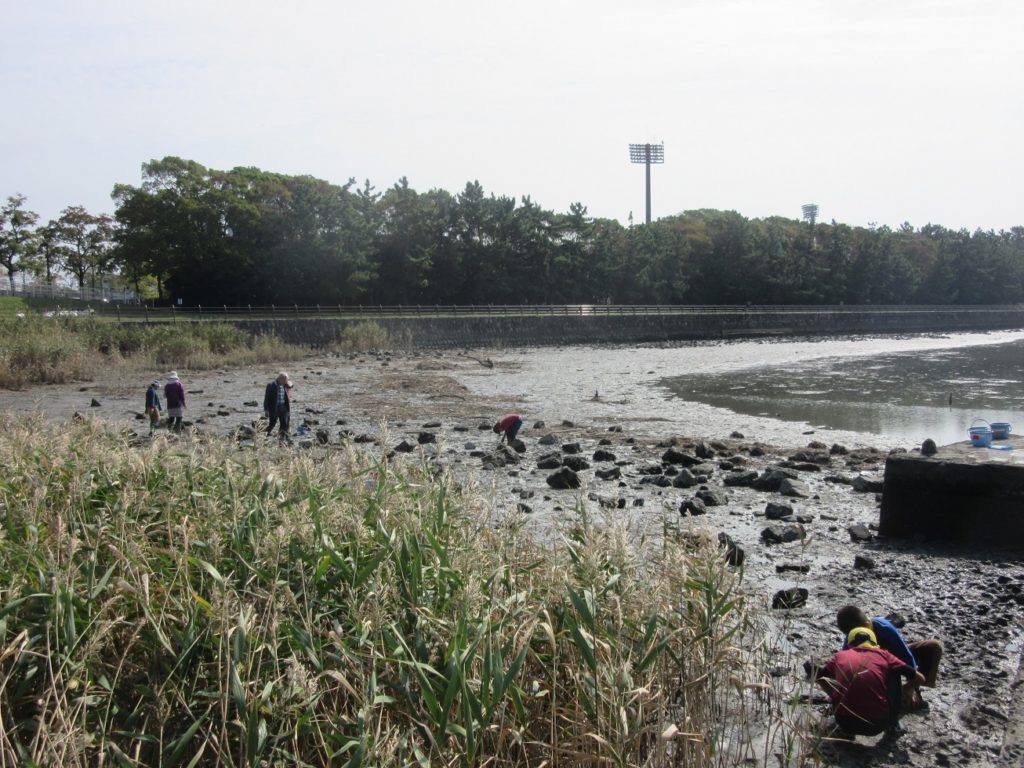
Tidal flat school programs are held on Saturdays, Sundays, and holidays when the tide is low. These hands-on observation programs are open to everyone from infants to adults. Using the Fujimae Tidal Flat and its surrounding area as a field, we offer a variety of programs: nature walks for observing living creatures, fishing culture experiences, and programs about garbage problems. The programs are held at the following three locations.
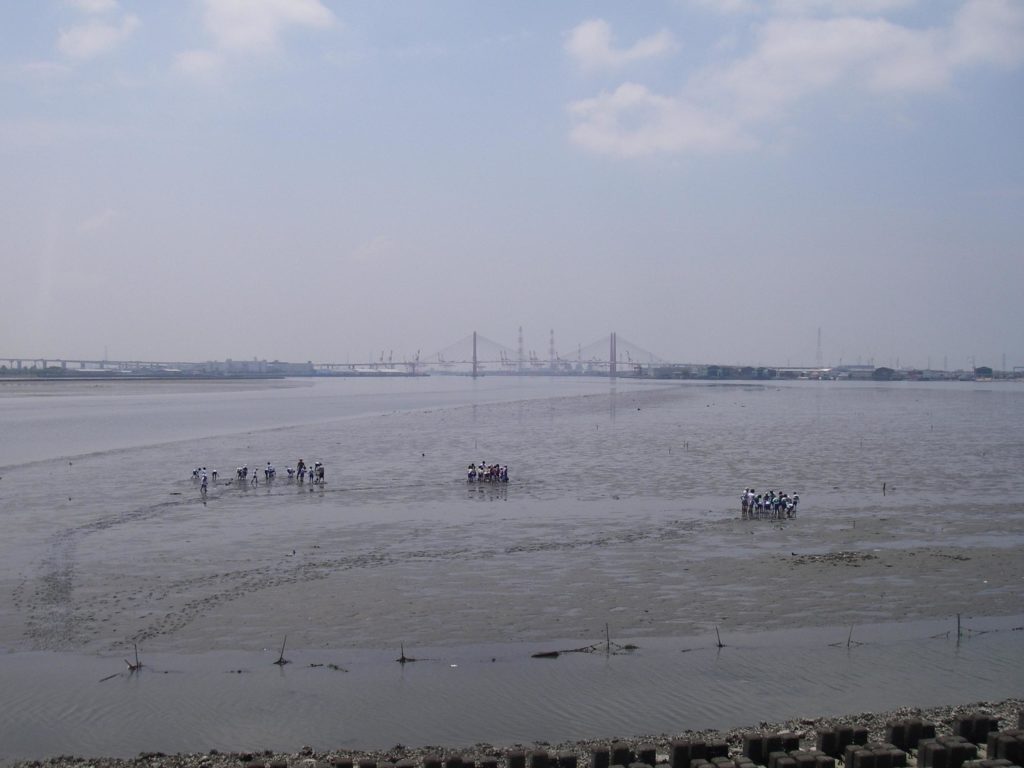
The Mud Flat
A large mud flat spreads to the south of the Fujimae Activity Center. This tidal flat was on the verge of being reclaimed as a landfill site. Mud shrimp (upogebia major) that dig burrows over 3 meters deep, and basket clams (corbicula japonica) and littoral spoon clams (laternula Marilina) can be observed. Sometimes eels and large gobies (glossogobius olivaceus) are caught in long eel traps set in the water near the tidal flat.
The Rocky Flat
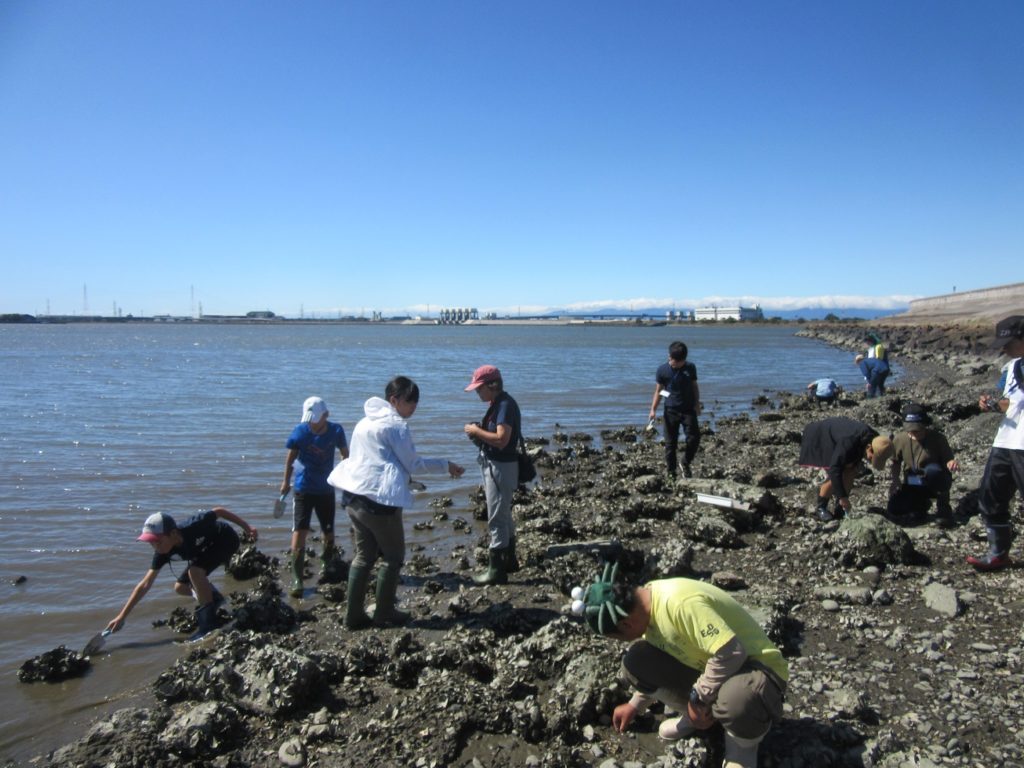
This is the rocky tidal flat made of pebbles along the shore near the muddy tidal flat. This is made up of soil and remains of the levees that collapsed during the Ise Bay Typhoon of 1959 and were never removed. Visitors can observe the mud crabs (hemigrapsus takanoi), hermit crabs, and sea snails (clithon faba) hiding under stones.
The Reedbed
Inae Park is located at the mouth of the Shonai River. Along the river, you can see the remains of a military runway called "Eitoku Slip" where military seaplanes used to take off. A small reedbed beside it is the habitat of a black crab (chiromantes dehaani). Small crabs (iloplax pusilla) dance in the sandy mud. In the fall, you can also observe mudskipper jumping on the mud flats.